So, you’re eyeing the Saudi Arabian market? That is a smart move. With the massive construction boom driven by Vision 2030—think NEOM, the Red Sea Project, and thousands of new housing units—the demand for sanitary ware is skyrocketing.
But here’s the reality check: Saudi Arabia is not an “easy” market anymore. If you are a wholesaler or exporter wanting to get your faucets into Jeddah or Dammam, you need a SASO-compliant game plan. This guide will walk you through exactly how to get your faucets SASO certified, labeled, and cleared through customs without getting stuck.
The Golden Rule: It’s All About “SABER”
First things first—forget about paper certificates you used to carry in a briefcase. Everything now happens on SABER», an online platform that links your product data directly to Saudi Customs.
Think of SABER as the gatekeeper. If your product isn’t registered and green-lighted in this system, it doesn’t matter how high-quality your faucets are—they will not leave the port entry.
The “Dual-License” Challenge
Here is where most newbies get tripped up. Faucets in Saudi Arabia are regulated by two separate rules at the same time. You need to pass both to get in:
- Water Efficiency: How much water does it save? (The “Green Label”).
- Safety & Quality: Is it built strong? Does it leach lead? (The “Building Materials” rule).
Technical Standards: SASO 2655 and Testing Protocols
Faucet certification is based on SASO 2655, which defines the official test requirements for plumbing fittings. Products must be tested to this standard (or its officially adopted SASO EN equivalents), as using generic international standards may lead to rejection.

Test Conditions and Pressure Requirements
SASO 2655 applies strict flow-rate testing to reflect harsh regional pressure conditions.
- Pressure Points for Flow Rate Testing: SASO 2655 distinguishes between high- and low-pressure faucet systems, with most Saudi and export-grade products classified as high-pressure.
-
- High-Pressure Products: Must be tested at 1.5 bar, 3.0 bar, and 4.5 bar (±0.2 bar). The mean value of measurements taken at these pressures is used to determine the nominal flow rate (Qnom).
- Low-Pressure Products: Tested at 0.2, 0.3, and 0.5 bar.
- Compliance Threshold: The average flow rate across the three pressure points must stay within the allowed limit (e.g., 5.7 L/min). Exceeding it—even at 5.8 L/min—results in failure.
- Static Pressure Resistance: Faucets are tested at pressures far above normal operation (e.g., ≥16 bar) to confirm structural strength and leak-free integrity.
Chemical Safety and Material Requirements
Given the potential health risks associated with plumbing fixtures, SASO 2655 includes requirements for material safety.
- Heavy Metal Extraction: The standard requires metal leaching tests (Pb, Cd, Cu, Zn) by filling the product with test fluid, holding it for a set time, and then analyzing the fluid.
- Compliance Limits: The limits for lead extraction are particularly strict, aligning with global trends toward “lead-free” brass or the use of PEX/polymer internal waterways to prevent water-to-metal contact.
Endurance and Mechanical Testing
To ensure the product’s durability (a key component of the Building Materials regulation):
- Life Cycle Testing: The cartridge or valve mechanism undergoes tens of thousands of actuation cycles (opening, closing, mixing) to ensure it does not drip or fail.
- Corrosion Resistance: The external finish (chrome, nickel, PVD) is subjected to salt spray testing (e.g., NSS test) to verify resistance to corrosion in humid environments (like Jeddah or Dammam).
The Role of Accredited Laboratories
SASO only accepts reports from ISO/IEC 17025–accredited laboratories, and the lab’s scope must specifically include SASO 2655 or the relevant SASO EN standard.
While some EN reports may be accepted as equivalent with CAB confirmation, non-EN standards (e.g., ASME) usually require additional technical justification.
The Water Efficiency Labeling Program
The Water Efficiency Label is mandatory for customs clearance and retail sales, using defined bands/levels based on flow-rate performance.
Efficiency Bands and Flow Rate Limits
The regulation categorizes products into Band A (High Efficiency) and Band B (Standard Efficiency) based on their nominal flow rate (Qnom). Crucially, it sets Maximum Flow Rates (Qmax) that act as a hard ceiling for market entry.
| Product Category | Sub-Category / Use | Maximum Flow (Qmax) | Band B Range (L/min) | Band A Range (L/min) |
|---|---|---|---|---|
| Bathroom Faucets | Public (Malls, Mosques, etc.) | 1.9 L/min | 1.7 < Qnom ≤ 1.9 | Qnom ≤ 1.7 |
| Bathroom Faucets | Private (Residential) | 5.7 L/min | 4.5 < Qnom ≤ 5.7 | 3.0 ≤ Qnom ≤ 4.5 |
| Kitchen Mixers | Private / General | 5.7 L/min | 4.5 < Qnom ≤ 5.7 | 3.0 ≤ Qnom ≤ 4.5 |
| Shower Heads/Mixers | General | 9.5 L/min | 7.6 < Qnom ≤ 9.5 | 1.9 ≤ Qnom ≤ 7.6 |
| Bidet Mixers | General | 8.0 L/min | 7.0 < Qnom ≤ 8.0 | 5.7 ≤ Qnom ≤ 7.0 |
| Shattaf (Hand Spray) | General | 8.0 L/min | 7.0 < Qnom ≤ 8.0 | 5.7 ≤ Qnom ≤ 7.0 |
Public vs. Private Use: Compliance depends on installation. Faucets for public projects (e.g., airports, schools) must meet 1.9 L/min, even if labeled for private use. Achieving this often requires spray-pattern aerators.
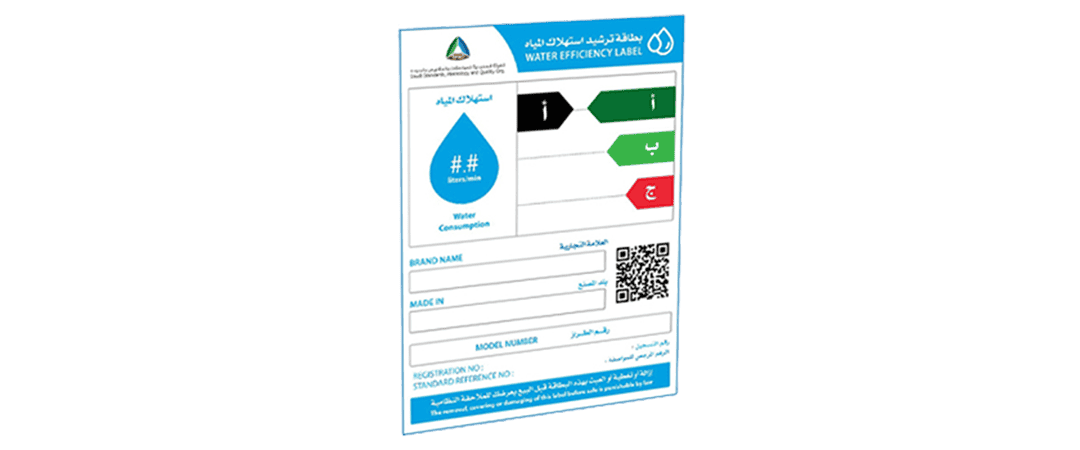
Label Design and Visual Elements
The physical label has undergone redesigns to improve clarity and reduce fraud.
- Color: The label is predominantly green, symbolizing environmental sustainability.
- Visuals: It features a bar chart indicating the efficiency level (Band A or B).
- Data Fields: It explicitly states the Nominal Flow Rate (e.g., “4.5 L/min”) and the Registration Number (License Number).
- QR Code: Scanning with the Taakkad app retrieves SASO records. Mismatched data (brand, model, flow rate) indicates the product is counterfeit or non-compliant.
- SASO Logo: The official logo serves as the government’s seal of approval.
Placement and Packaging Rules
The regulation is prescriptive about where the label must appear.
- Primary Location: The label must be affixed to the individual product packaging (the box containing the single faucet).
- Visibility: It must be placed in a manner that is clearly visible to the consumer without opening the box.
- Durability: The label must be printed or attached with adhesive that ensures it stays on the package until it reaches the end user.
- Prohibitions: It is illegal to place the label loosely inside the box or to cover it with other shipping stickers or price tags.
Conformity Assessment Procedures: The SABER Journey
Managed via the SABER platform, connecting manufacturers, CABs, and customs. Water Rationalization typically follows a Type 1a assessment, often combined with Building Materials.
Phase 1: Registration and Setup
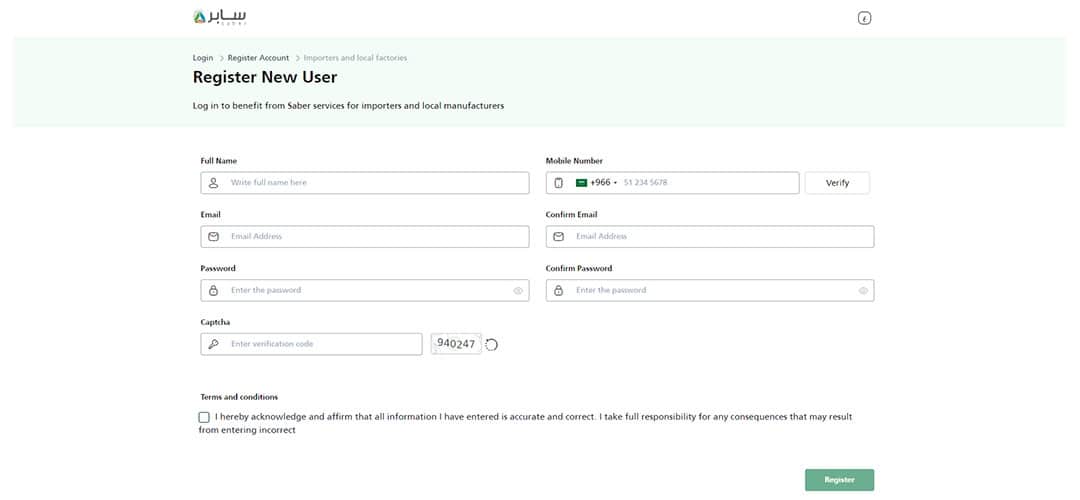
- Importer Registration: The process begins with a Saudi-based entity (the importer) registering on SABER. They must have a valid Commercial Registration (CR) with activities matching the importation of sanitary ware.
- Product Entry: The importer adds the product details into the system:
- HS Code: Crucial step. Entering 848180900002 triggers the Water and Building Material requirements.
- Product Data: Brand name, model number, country of origin, and manufacturer details.
- Photos: High-resolution images of the product, its markings, and its packaging.
Phase 2: Selection of Conformity Assessment Body (CAB)
Once the product is registered, the importer must select a SASO-approved CAB (also known as a Notified Body) to perform the technical review.
- Selection: The importer sees a list of approved bodies (e.g., Intertek, SGS, TUV, Nemko, QIMA).
- Strategy: It is highly advisable to select a CAB that has a presence in the exporting country. For example, if importing from Italy, selecting a CAB with an Italian office facilitates the transfer of test reports and technical files.
- Fees: The importer pays the initial processing fees via the SADAD payment system on the platform.
Phase 3: Technical File Review and P-CoC Issuance
The CAB conducts a rigorous review of the technical documentation provided by the manufacturer. This is the “Conformity Assessment.”
- Required Documents in the Technical File:
-
- Valid Test Report: Less than 2-3 years old, from an ISO 17025 accredited lab, covering SASO 2655 (Flow rate + Safety tests).
- Risk Assessment: A document identifying potential risks (e.g., bursting, heavy metals) and mitigation strategies.
- ISO 9001 Certificate: Proof of the manufacturer’s Quality Management System (QMS).
- Declaration of Conformity: A signed document where the manufacturer declares the product meets all relevant Saudi regulations.
- Marking Proof: Photos showing the manufacturer’s name/trademark is permanently marked (laser etched or stamped) on the faucet body. A sticker is usually insufficient for the product body marking.

- Outcome: If the file is approved, the CAB issues the Product Certificate of Conformity (P-CoC).
-
- Validity: 1 Year.
- Scope: Covers the specific models listed.
- Water License: Simultaneously, the CAB approves the issuance of the Water Rationalization License, allowing the importer to download the Water Efficiency Label files.
Phase 4: Shipment Certificate of Conformity (S-CoC)
The P-CoC qualifies the product, but the S-CoC qualifies the shipment.
- Request: When a shipment is ready, the importer initiates a “New Shipment Request” in SABER.
- Invoice Upload: The commercial invoice is uploaded.
- Verification: The CAB checks that every line item on the invoice has a valid P-CoC and Water License.
- Issuance: Upon payment of the S-CoC fee, the certificate is issued.
- Integration: The S-CoC data is sent automatically to the FASAH customs system, allowing the shipment to clear customs upon arrival. Without this digital handshake, the container will be held at the port.
Economic and Operational Analysis
Compliance with Saudi regulations represents a significant cost center and operational consideration for exporters.
Financial Implications (Cost of Compliance)
The costs are divided between government fees (SASO) and service fees (CABs/Labs).
| Cost Item | Estimated Amount (SAR) | Estimated Amount (USD) | Frequency | Payable To |
|---|---|---|---|---|
| Lab Testing | 2,000 – 6,000 | $530 – $1,600 | Once every 2-3 years | Accredited Lab |
| SABER P-CoC Fee | 500 | $133 | Annual | SASO (via SABER) |
| Water License Fee | 500 | $133 | Annual | SASO (via SABER) |
| CAB Processing Fee | 1,000 – 3,000 | $260 – $800 | Annual | CAB (Notified Body) |
| S-CoC Fee | 400 – 550 | $106 – $146 | Per Shipment | SASO + CAB |
Source: Estimates derived from snippets and standard industry pricing.
Operational Challenges and Supply Chain Strategy
- Lead Times: Certification takes 2–4 weeks with existing reports; new testing adds 4–6 weeks.
- Inventory Segregation: Saudi labels require dedicated SKUs/packaging; generic stock is rejected.
- Traceability: Permanent body marking is mandatory—last-minute re-labeling of generic products is not allowed.
Technical Challenges and Engineering Implications
For product designers and engineers, the Saudi regulations impose specific constraints that must be addressed at the R&D stage.
The “Low Flow” Engineering Challenge
Achieving a flow rate of 1.9 L/min for public faucets is technically demanding.
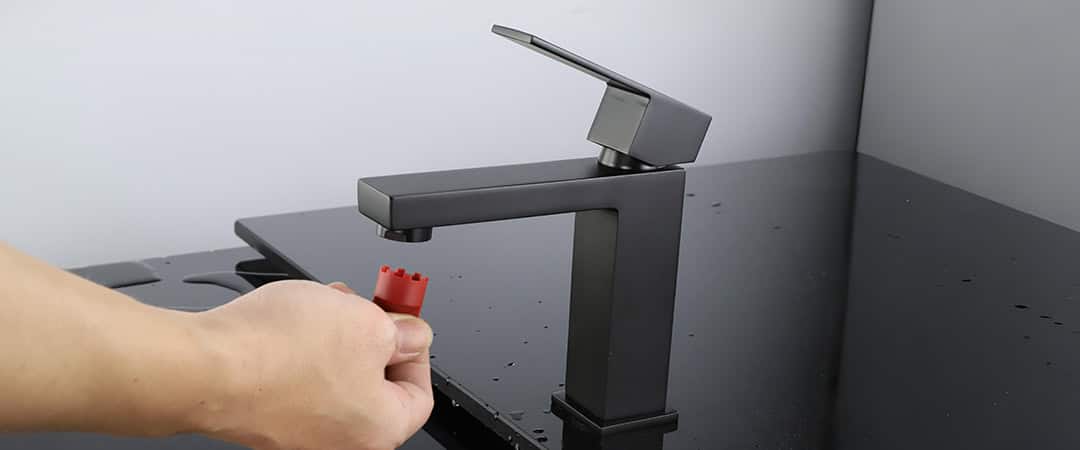
- Aerator Selection: Low-flow faucets need spray or laminar aerators to maintain pressure and coverage.
- User Experience: Engineering must boost water velocity to ensure adequate rinsing despite reduced flow.
Material Compliance
The limit on heavy metals necessitates the use of high-quality materials.
- Brass Alloys: Standard leaded brass (often used for machinability) may fail the extraction tests. Manufacturers are increasingly shifting to DZR (Dezincification Resistant) brass or Low-Lead brass alloys.
- Internal Linings: Some manufacturers use PEX or polymer linings inside the faucet body so that water never touches the metal, guaranteeing compliance with heavy metal limits.
Pressure Stability
SASO 2655 requires PCA aerators to maintain constant flow (≤5.7 L/min) across 0.2–4.5 bar. Static restrictors fail under high pressure, but dynamic O-rings ensure compliance.
Conclusion
The SABER-regulated Water Rationalization process ensures only high-quality, compliant products enter the market, closing it to inefficient or substandard faucets.
- Keys to Success:
- Strategic Alignment: Align products with Saudi Vision 2030 and Band A/B efficiency.
- Technical Rigor: Test to SASO 2655 with PCA technology.
- Digital Competence: Navigate SABER for smooth P‑CoC and S‑CoC issuance.
- Operational Discipline: Ensure correct labeling, body marking, and packaging to pass customs.
The Water Efficiency Label is a license to operate in Saudi Arabia. Investing in proper engineering and certification ensures market access, while bypassing requirements leads to border rejection and lost viability.
FAQs

More post you may interested in