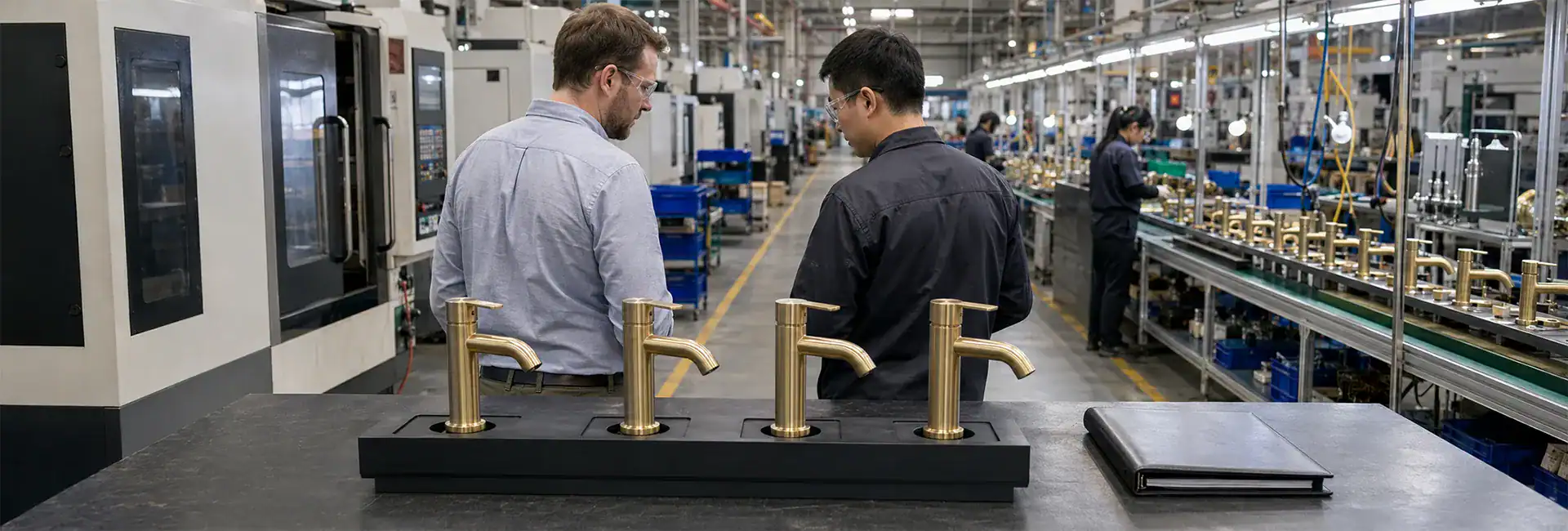
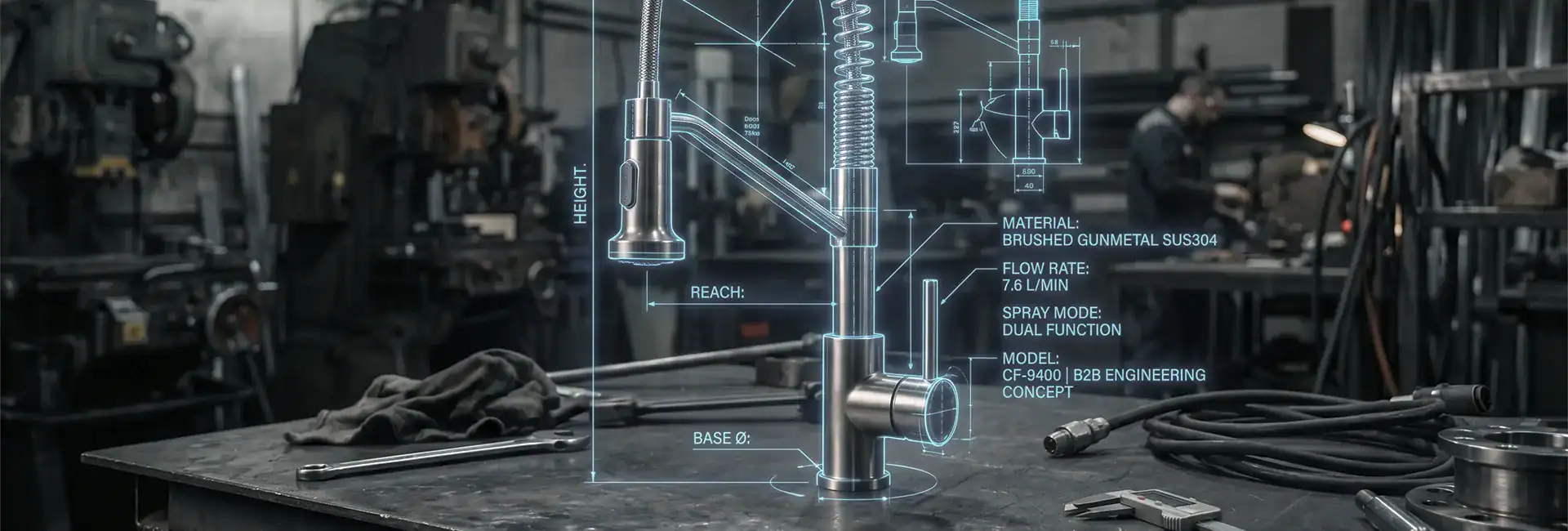
Executive Summary: The 2026 Engineering Baseline (TL;DR)
- Surface Execution: Traditional electroplating is obsolete. PVD vacuum deposition is mandatory to eliminate finish bleeding on complex dual-tone designs.
- Geometric Precision: Standard die-casting fails micro-knurling. Multi-axis CNC machining from solid brass blanks is required for zero-tolerance assembly and accommodating compact 35mm cartridges.
- Smart Component Shielding: To support Matter-protocol electronics, the brass housing must feature CNC-machined waterproof cavities and strict thermal isolation to prevent logic board failure.
- Absolute Compliance: Customs clearance relies on Premium Low-Lead DZR Brass (AB1953 compliant). Hydrodynamic efficiency mandates strict 1.2 GPM laminar calibration for LEED certification.
- The Procurement Moat: Partner exclusively with a 100% pure ODM facility that executes strict NDAs and delivers 15-day rapid prototyping.
Table of Contents
Introduction: The Shift from Aesthetics to Engineering Feasibility
As global commercial plumbing regulations tighten heading into 2026, the procurement logic has permanently shifted. While concealed sanitary installations heavily prioritize universal rough-in architecture and thermostatic safety (Read our 2026 Shower System Engineering Trends), deck-mounted basin faucets present a distinctly rigorous set of compliance and hydrodynamic challenges
Today, the critical risk factor for premium brand owners and project contractors is the execution gap between a complex CAD rendering and a zero-tolerance physical product.
When analyzing 2026 basin faucet trends, the engineering baseline dictates architectural depth: severe geometric profiles, micro-precision knurled textures, and deep-toned industrial palettes (such as Benjamin Moore’s Silhouette AF-655). While these concepts look flawless on screen, they immediately expose the structural and tolerance limitations of traditional brass casting.
For a Senior Product Manager or Sourcing Director, achieving the 2026 “aesthetic” is essentially a challenge of multi-axis machining capabilities and hydrodynamic precision.
In high-traffic commercial environments, where renovation cycles strictly span 7 to 10 years, a basin faucet is an operational asset, not merely a decorative fixture. The procurement standard has moved entirely away from “disposable aesthetics” toward brutal engineering excellence. Executing these projects requires a baseline of 35mm cartridge standardization, industrial-grade PVD consistency, and uncompromising 100% IQC protocols.
At LuxuryHome, our objective as a bespoke ODM facility is to engineer a secure “IP Moat” for your brand. This article dissects the four critical engineering trends driving 2026, and how top-tier manufacturers translate complex visions into production-ready, globally compliant hardware.

Trend 1: Executing “Warm Minimalism” – The PVD Vacuum Chamber Imperative
A defining basin faucet trend in 2026 is the decisive move toward “Warm Minimalism” within premium commercial hardware. This aesthetic demands deeper, organic dark tones—specifically burnt umber, gunmetal, and silhouette-adjacent charcoals—often executed in complex dual-tone (mixed finish) configurations.
However, for Sourcing Directors and Project Managers, selecting the color is the easy part. The critical engineering challenge lies in the method of application, batch-to-batch consistency, and commercial-grade durability.
The Technical Gap: The Failure of Traditional Electroplating
Traditional wet electroplating is obsolete for the 2026 luxury market. It fails to survive the aggressive chemical cleaning protocols of high-traffic commercial environments, and it exposes dual-tone designs (e.g., Brushed Gold paired with Matte Black) to the catastrophic risk of “bleeding” at the finish interface.
The PVD Vacuum Deposition Mandate
To mitigate these structural liabilities, top-tier OEM production has shifted exclusively to Physical Vapor Deposition (PVD). Rather than dipping hardware in chemical baths, PVD is conducted in high-vacuum chambers where vaporized metals (such as Titanium or Zirconium) are bonded at a molecular level to the DZR brass substrate.
At our Jiangmen facility, executing these complex 2026 palettes requires three non-negotiable engineering protocols:
- Zero-Bleeding Dual-Tone Execution:
In dual-tone manufacturing, the transition line is a common failure point. By utilizing advanced multi-stage masking alongside precision PVD vacuum chambers, we achieve mathematically crisp transitions, ensuring the physical product matches the exacting CAD rendering without cross-contamination. - Digital Colorimetry for Batch Consistency:
A critical vulnerability in global supply chains is color deviation between the prototype and the mass-produced order. By leveraging strict digital colorimetry, we guarantee that specific “Warm Minimalist” hues remain identical from the first unit to the ten-thousandth production unit. - The Destructive 24H ASS Rigor:
Real-world longevity must be validated in the lab. Every batch of PVD-coated hardware is returned to our internal laboratory for 100% IQC. We enforce mandatory 24-hour Acid Salt Spray (ASS) tests and cross-hatch adhesion protocols to verify that the molecular bond exceeds international corrosion resistance standards.
For global distributors and brand owners, partnering with a facility that standardizes these PVD protocols translates directly into a drastically reduced liability profile and a sustainable competitive advantage.
Trend 2: The Machining Reality of Knurled Textures & Complex Geometries
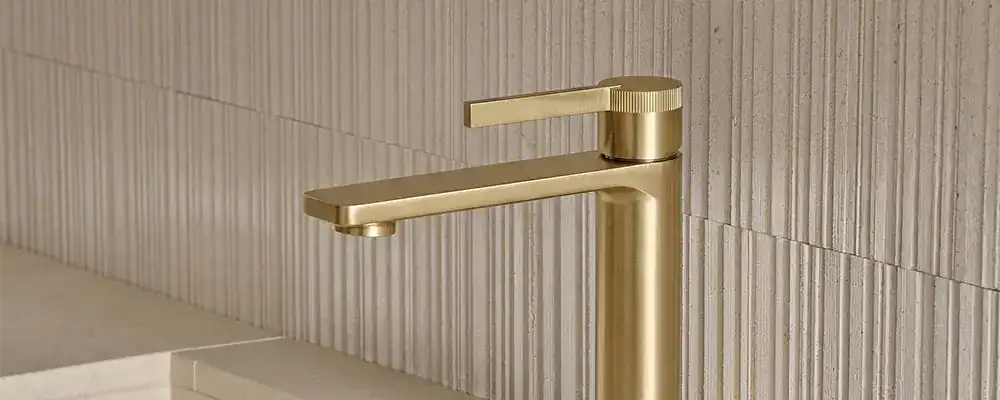
The 2026 bespoke design landscape dictates a massive surge in tactile hardware. Micro-precision knurled handles, ultra-slim spouts, and severe polygonal bodies are no longer niche concepts—they are standard requirements for premium ODM projects.
However, translating these aggressive architectural geometries from CAD renderings into physical brass exposes a critical vulnerability in traditional manufacturing supply chains.
The Shift from Die-Casting to Solid Brass Machining
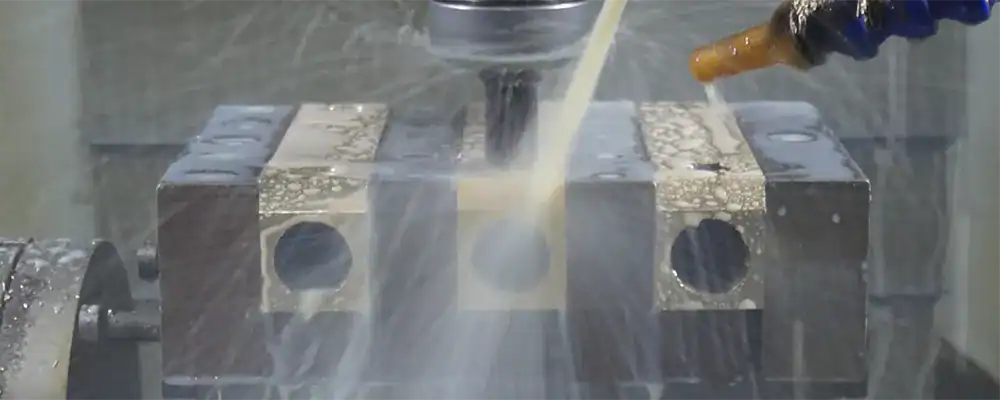
For Senior Product Managers relying on legacy foundries, executing 2026 designs introduces immediate structural risks. Conventional brass die-casting fundamentally fails to reproduce micro-precision geometries. To achieve commercial-grade structural integrity, top-tier production must transition exclusively to Multi-Axis CNC Machining.
At our Jiangmen facility, we enforce this transition to address two critical tolerance failures:
- Eradicating Texture Blurring & Porosity:
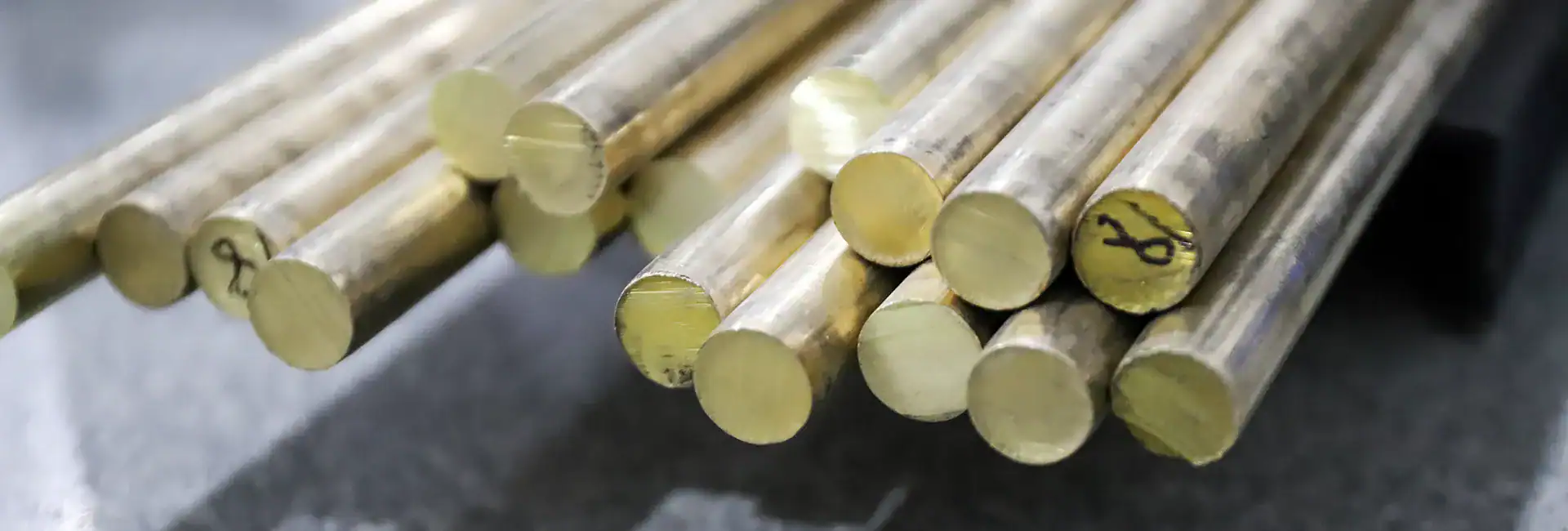
Casting molten metal inevitably leads to surface pitting (sand holes) and blurred knurl definitions—defects highly visible under bright hotel lighting. By utilizing CNC machining to carve directly from premium solid brass blanks, every diamond-cut knurl retains its exact micron-level specification. - Achieving Zero-Tolerance Assembly:
Multi-faceted polygonal designs demand absolute alignment. Standard casting often results in visible gaps between the handle and the faucet body. Machining components from solid DZR brass eliminates mechanical play, achieving mathematically perfect seams and a frictionless user experience.
Internal Architecture: The 35mm Cartridge Standardization
True engineering feasibility requires aligning exterior geometry with the internal hydrodynamic core. The ultra-slim profiles trending in 2026 cannot exist if the internal architecture is bloated. To achieve this, the internal configuration must be ruthlessly optimized:
- Eliminating the 40mm Compromise:
We categorically reject legacy 40mm cartridges for our premium deck-mounted models. The bulky nature of 40mm components forces manufacturers to artificially thicken the faucet body, instantly destroying a minimalist CAD vision. - 35mm Space Optimization:
Executing ultra-narrow brass bodies requires the strict integration of compact 35mm Sedal ceramic cartridges. This precise standardization frees up critical internal volume, allowing your designers to specify severe architectural lines while still guaranteeing a 500,000-cycle lifespan and maintaining perfect laminar flow.

Trend 3: Matter Protocol Integration & The Physical Shield
The 2026 smart bathroom has evolved past isolated electronic novelties into a unified ecosystem driven by the Matter Protocol. For premium brand developers and facility managers, the seamless integration of touchless sensors and automated temperature controls into this universal standard is now non-negotiable.
However, the true engineering challenge lies not in the software architecture, but in the physical housing required to protect these delicate components within high-traffic, highly humid commercial environments.
Engineering the Physical Shield for Smart Components
Electronic sensors and motorized valves are exceptionally vulnerable to moisture ingress and mechanical stress. Standard brass casting inevitably leaves structural porosity and internal micro-gaps, leading to water condensation and catastrophic logic board failures. To secure smart hardware, the physical housing must be engineered with absolute precision:
- Zero-Tolerance Sensor Cavities:
Instead of relying on standard casting, internal sensor housings must be machined directly from solid brass blanks. This creates a mathematically perfect, waterproof chamber, ensuring absolute zero-tolerance assembly to protect all embedded electronic modules from vapor intrusion. - Thermal & Hydrodynamic Isolation:
The internal structural architecture must categorically isolate the high-temperature hydrodynamic flow from the logic boards. This strict thermal shielding guarantees the longevity of the smart components, preventing heat degradation even under continuous commercial usage.
TCO & Facility Maintenance Optimized Architecture
In luxury resorts and commercial properties, the renovation cycle strictly spans 7 to 10 years. For project contractors, a smart faucet is evaluated purely by its Total Cost of Ownership (TCO). A failed smart cartridge or a leaking hose translates into disastrous plumbing labor costs and unacceptable room downtime. Executing a maintenance-optimized architecture requires three baseline specifications:
- Commercial PEX & Rapid-Install Mechanics:
To mitigate crushing labor costs, systems must be supplied with burst-proof, commercial-grade PEX supply lines and engineered with quick-spin installation nuts. This allows contractors to execute rapid, error-free installations across hundreds of hotel units simultaneously. - Heavy-Duty Internal Valving:
Smart activation still relies on physical valving. Integrating 500,000-cycle tested ceramic cartridges guarantees half a million leak-free mechanical actuations, drastically reducing the need for routine maintenance intervention. - Aggressive Water Neutralization:
The physical body must act as a fortress against internal corrosion. Utilizing Dezincification-Resistant (DZR) Brass physically neutralizes structural decay caused by aggressive commercial water conditions, ensuring the hardware outlasts the renovation cycle.
By marrying cutting-edge Matter protocol compatibility with uncompromising structural engineering, top-tier ODM facilities ensure that smart plumbing fixtures deliver both advanced functionality and bulletproof commercial durability.
Labor Cost Optimization (TCO)
In a 500-room resort project, the true cost of a faucet is defined by plumbing labor. Here is the 2026 LuxuryHome TCO benchmark:
- Legacy Faucet Installation: Threaded rods & standard hoses = ~20 mins per unit.
- LuxuryHome Commercial Standard: Quick-spin nuts & pre-assembled PEX = ~8 mins per unit.
- Project Impact: Reduces plumbing labor hours by up to 60%, accelerating project handover timelines and mitigating on-site contractor overhead.

Trend 4: Hydrodynamic Precision for Global Compliance
For global wholesalers and lead architects, 2026 presents a highly aggressive, zero-tolerance regulatory landscape. The intersection of international plumbing codes and sustainable commercial architecture has transformed “environmental compliance” from a marketing buzzword into a rigorous hydrodynamic engineering challenge.
Failing to meet these strict metrics results in catastrophic project delays, stalled LEED certifications, or entire mixed-SKU shipments seized by North American and European customs. Translating aesthetic ambition into a globally compliant physical asset requires “compliance by design.”
Engineering the 1.2 GPM Mandate & Hydrodynamic Efficiency
Achieving strict water conservation standards without sacrificing tactile water pressure requires mastering internal fluid dynamics. Resolving this engineering paradox requires structural optimization at the foundry level, rather than simply relying on flow restrictors:
- Internal Waterway Optimization:
Turbulence and pressure drops often occur before the water even reaches the spout due to internal casting burrs. By executing ultra-smooth internal water channels, hydrodynamic friction is mathematically minimized, preserving maximum tactile force. - Laminar Flow Calibration:
Premium deck-mounted designs must integrate top-tier aerator technology, such as Swiss-engineered Neoperl laminar aerators. This calibration ensures a crystal-clear, splash-free flow that strictly adheres to the 1.2 Gallons Per Minute (GPM) threshold.
For commercial contractors, this precise hydrodynamic efficiency directly translates to measurable LEED certification points and compliance with strict CEC (California Energy Commission) mandates.
The Physical Barrier Against Lead and Corrosion
With the aggressive enforcement of the California AB1953 mandate and the European Drinking Water Directive, the chemical composition of the faucet body is under severe international scrutiny. Securing absolute supply chain immunity requires a zero-tolerance approach to heavy metals:
- Premium DZR Brass Foundation:
Leaching liabilities must be neutralized at the raw material stage. Forging high-end hardware exclusively from Premium Low-Lead and Dezincification-Resistant (DZR) Brass physically eliminates structural porosity and secures longevity in aggressive water conditions. - NSF/ANSI 61 Eradication Protocols:
By utilizing these premium, high-density substrates, the internal waterways significantly surpass the NSF/ANSI/CAN 61 standards for drinking water system health effects, completely eradicating the risk of heavy metal contamination in residential and hotel ingestion cycles. - Global Certification Armor:
A robust OEM/ODM pipeline is engineered from the ground up to secure authentic cUPC, CE, WRAS, and WaterMark certifications. Partnering with a facility that maintains this certification armor provides supply chain managers with absolute immunity against import restrictions and regulatory audits.
The PFAS-Free Internal Mandate
While global manufacturers scramble to meet AB1953 lead-free standards, the definitive 2026 compliance trap lies within internal non-metallic components. European and North American regulators are aggressively phasing out PFAS (per- and polyfluoroalkyl substances).
At LuxuryHome, our supply chain engineering extends beyond the brass substrate. We mandate 100% PFAS-free O-rings, internal sealants, and commercial PEX hoses, providing your brand with an impenetrable shield against the most recent wave of global customs audits.
The 2026 Procurement Baseline: Securing Your IP with a Pure ODM Facility
Translating complex CAD concepts into market-ready, globally compliant fixtures cannot be outsourced to trading intermediaries or fragmented supply chains. Navigating extreme geometric tolerances and zero-bleeding PVD requirements demands a consolidated, source-level manufacturing strategy.
Operating exclusively from our 35,000-square-meter precision facility in Jiangmen, our business model is engineered around one uncompromising principle: we are a 100% pure OEM/ODM source factory. We categorically reject the B2C retail model. We do not compete with our clients; our sole operational objective is to execute your architectural geometry and mathematically defend your Intellectual Property (IP) moat.
By integrating your supply chain with our Jiangmen facility, you secure an agile, future-proof manufacturing pipeline:
- Strict NDA Execution & IP Isolation:
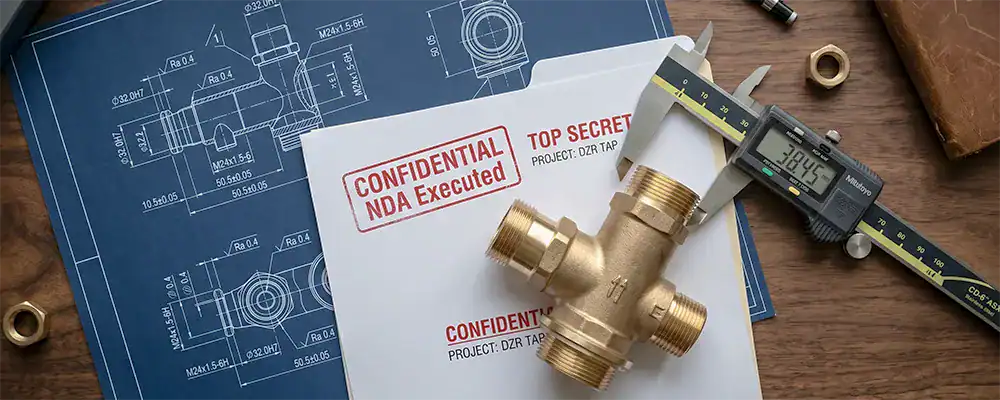
Your design IP is your most critical commercial asset. We operate under legally binding Non-Disclosure Agreements (NDAs), executed strictly before the submission of any proprietary drawings. Your bespoke geometry remains highly classified. - 15-Day Rapid 3D Prototyping:
Compressing time-to-market is a vital competitive advantage. Our dedicated engineering team translates your bespoke blueprints into physical, zero-tolerance brass prototypes within 15 days, accelerating the CAD-to-reality validation process. - White-Label Visual Marketing Assets:
To aggressively accelerate your sales cycle, we supply high-definition, white-label video assets and 3D rendering materials alongside the physical hardware. This empowers your marketing team to initiate pre-sale campaigns while your heavy-duty, mixed-SKU containers are still in transit. - Optimized Cash Flow via Mixed-SKU Containers:
We understand the inventory risks faced by global wholesalers. Our production matrix is engineered to support highly complex, mixed-SKU 20ft/40ft containers. Coupled with a stabilized 35-45 day lead time, we empower supply chain directors to maintain lean inventory while ensuring zero out-of-stock scenarios during peak project seasons.
Navigating the complexities of 2026 basin faucet trends requires more than a trading intermediary. Securing a pure ODM manufacturing partner capable of executing brutal engineering realities is the defining factor for your next project.
Verified 100% Source Manufacturer by SGS & TUV.