TL;DR: 2026 Shower System Sourcing & Compliance at a Glance
Entering 2026, importers of sanitary ware face a gauntlet of aggressive regulatory shifts—from the mandatory U.S. CPSC eFiling rollout (July 2026) to the strict EU Drinking Water Directive (DWD) sub-0.1% lead limits. To avoid costly cargo holds, product recalls, and behind-the-wall infrastructure failures, global procurement teams must upgrade their vendor criteria.
Here is what you must demand from your OEM manufacturers in 2026:
- Adaptive Flow Engineering: Navigate conflicting federal (SHOWER Act) and state (CEC/WaterSense) mandates with single-SKU modularity. Demand air-injection technology and factory-calibrated restrictors (1.5 to 2.5 GPM).
- Precision Concealed Valves: Eradicate behind-the-wall leaks by requiring ±0.02mm CNC-machined tolerances, 3.5 MPa (500 PSI) burst pressure validation, and thermostatic cartridges with an anti-scald reaction time of <0.3 seconds.
- Sub-0.1% Lead Compliance: Phase out standard scrap-cast alloys. Ensure all wetted components are machined from premium H59 or DZR brass to meet strict North American (cUPC/NSF) and new European (DWD) heavy-metal leaching standards.
- PVD & Salt-Spray Validated Finishes: As chemical (PFAS) restrictions tighten, minimalist architectures demand eco-friendly Physical Vapor Deposition (PVD) finishes. Require laboratory proof of 200+ hour Neutral Salt Spray (NSS) test survival.
- Digitized Traceability for Customs: With CPSC eFiling, EU CBAM, and UFLPA audits, undocumented sub-tier sourcing is a critical liability. Partner with vertically integrated suppliers who perform 100% in-house air-leak testing to generate instant, verifiable compliance data for your customs brokers.
The 2026 global sanitary ware supply chain is undergoing a critical transformation. Importers navigating the North American and European markets face a convergence of stringent digital customs mandates, aggressive chemical phase-outs, and polarizing water-efficiency legislation.
As compliance risks escalate—from the mandatory U.S. CPSC eFiling rollout on July 8, 2026, to the EU’s strict sub-0.1% lead directives—the financial liabilities of sourcing from low-tier, unverified manufacturers have never been higher.
To mitigate regulatory bottlenecks and mechanical failures, top-tier B2B sourcing directors are fundamentally restructuring their procurement criteria. Here are the four macro-trends shaping commercial shower system sourcing in 2026, along with the specific engineering standards buyers must demand from their manufacturing partners.
Table of Contents

Shower System Trend 1: Adaptive Volumetric Flow Engineering Amidst Regulatory Divergence
The Market Challenge:
Importers managing North American inventory face a fractured regulatory environment. While the federal SHOWER Act (H.R. 4593) aims to accommodate flow rates up to 2.5 gallons per minute (GPM), key state-level mandates maintain strict conservation limits.
Designing a single-SKU inventory is highly complex when balancing federal high-flow demands against the California Energy Commission (CEC) 1.8 GPM standard and the EPA WaterSense maximum threshold of 2.0 GPM.
What to Look For in a 2026 Supplier:
Procurement teams must move away from factories that require entirely different product molds for different states. Instead, demand suppliers capable of modular volumetric flow engineering.
The benchmark standard should include internal air-injection capabilities and factory-calibrated flow restrictors that can be customized per batch without altering the core hardware architecture.
The Luxuryhome Benchmark
As a Tier-1 OEM, Luxuryhome has integrated these adaptive technologies as our baseline. Our systems utilize Air-Injection Technology to maximize droplet saturation and spray force while reducing actual water consumption by up to 30%.
Depending on the target market, we factory-install precisely calibrated flow restrictors (1.5 GPM, 1.8 GPM, or the standard 2.5 GPM). This modularity allows our B2B partners to achieve seamless WaterSense and CEC compliance while maintaining a unified product line
Shower System Trend 2: Eradicating Infrastructure Failures in Concealed Valves
The Market Challenge:
The influx of low-cost concealed shower valves has generated severe market blowback. Deficiencies such as cracked ceramic discs, inferior brass alloys, and compromised O-ring seals frequently cause undetected, behind-the-wall water seepage. Because these components are embedded in tile or stone, premature failure results in catastrophic tear-out costs.
Furthermore, non-standardized replacement parts violate the repairability mandates outlined in the EU’s Ecodesign for Sustainable Products Regulation (ESPR).
What to Look For in a 2026 Supplier:
To mitigate the massive liabilities of behind-the-wall leaks, sourcing managers must upgrade their vendor criteria. Moving into 2026, buyers should no longer accept standard cast valves. Require your manufacturers to provide:
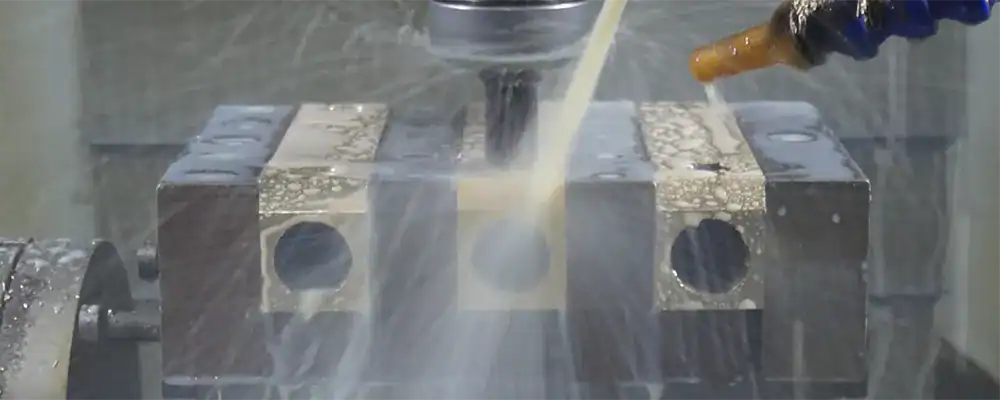
- CNC-Machined Precision: Look for suppliers utilizing multi-axis CNC machining centers to guarantee tolerances of at least ±0.02 mm for flawless gasket seating.
- Tier-1 Thermostatic Cartridges: Specify global brands (e.g., KEROX or VERNET) and demand empirical laboratory data proving an anti-scald reaction time of <1 second.
- Pressure Validation: Ensure your factory validates batch samples to extreme hydrostatic burst pressures before shipping.
The Luxuryhome Benchmark
Luxuryhome engineers concealed valves to eliminate these exact failure points. By internalizing over 20 CNC machining centers, we consistently achieve ±0.02 mm manufacturing tolerances.
Our integrated KEROX/VERNET thermostatic cartridges lock temperatures at exactly 38°C with an ultra-sensitive anti-scald reaction time of <0.3 seconds.
During laboratory validation, our valve bodies withstand hydrostatic burst pressures of up to 3.5 MPa (500 PSI), and cartridges undergo 500,000 open/close life-cycle tests—guaranteeing a 10-plus year operational lifespan with zero seepage.
Shower System Trend 3: Strict Metallurgical Compliance and the 0.1% Lead Mandate
The Market Challenge:
Core material chemistry is facing unprecedented legislative scrutiny. The updated EU Drinking Water Directive (DWD) mandates a maximum 0.1% lead content limit by weight for brass alloys in water-contact materials, effective December 31, 2026.
Simultaneously, the U.S. Consumer Product Safety Commission (CPSC) is aggressively targeting uncertified fixtures for lead leaching. Relying on generic, untested brass alloys from secondary markets is now a direct path to product recalls.
What to Look For in a 2026 Supplier:
Sourcing directors must completely phase out standard scrap-cast brass. Moving forward, supply chain audits must verify that all wetted components are cast from certified low-lead or Dezincification Resistant (DZR) brass.
Furthermore, buyers should request documented proof that the supplier can customize their alloy mix to meet specific regional requirements (e.g., North America vs. EU DWD standards).
The Luxuryhome Benchmark
Luxuryhome engineers all wetted waterways exclusively using premium H59 and DZR brass. For the North American market, our baseline metallurgical controls guarantee a weighted average lead content of <0.25%, fully complying with cUPC and NSF standards.
For European partners, our direct, in-house foundry capabilities allow us to machine specialized alloys that strictly meet the EU’s <0.1% lead threshold, fully qualifying for the EU Positive List.
Shower System Trend 4: Minimalist Concealed Architecture Meets High-Performance PVD Finishes
The Market Challenge:
Interior design in North America and Europe has overwhelmingly shifted toward minimalist, concealed shower configurations. Consumers demand bespoke finishes like Brushed Gold, Gunmetal, and Matte Black.
However, traditional electroplating processes are increasingly scrutinized under EU chemical regulations (including strict PFAS restrictions on protective coatings).
Furthermore, inferior surface finishes from low-tier suppliers are notorious for premature tarnishing, blistering, and peeling when exposed to hard water and commercial bathroom cleaning agents.
What to Look For in a 2026 Supplier:
To bridge the gap between high-end aesthetics and environmental compliance, buyers must evaluate a factory’s in-house surface treatment capabilities and reject non-compliant chemical sealants.
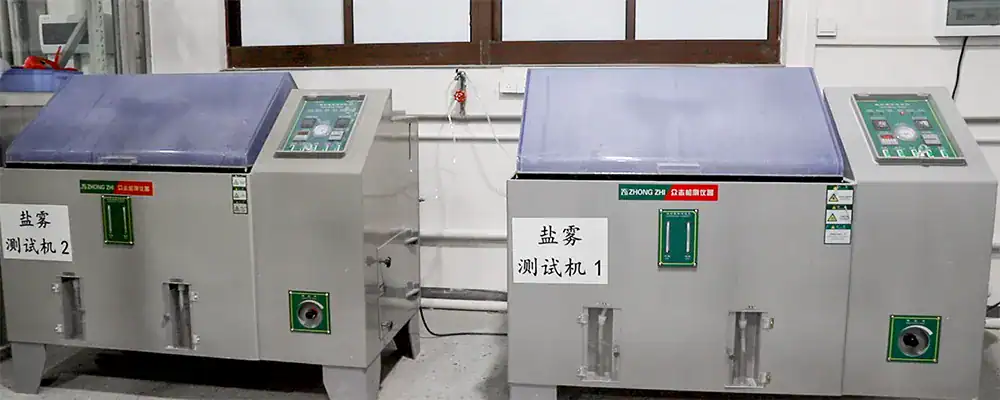
Require your manufacturing partners to utilize Physical Vapor Deposition (PVD) or eco-friendly electroplating. Most importantly, demand empirical Salt Spray Test (SST) data for every finish option. A qualified supplier should easily provide reports showing passing grades for both acidic and neutral testing environments.
The Luxuryhome Benchmark
Luxuryhome completely bypasses reliance on harmful chemical coatings by utilizing advanced PVD and eco-friendly electroplating technologies. To guarantee aesthetic longevity in harsh, high-humidity environments, every finishing batch is subjected to rigorous, laboratory-grade corrosion testing.
Our fixtures consistently pass 24-hour Acid Salt Spray (ASS) tests and exceed 200 hours of Neutral Salt Spray (NSS) testing. This ensures that whether you specify a complex PVD Brushed Brass or a Matte Black finish, the architectural integrity of your concealed minimalist design remains flawless for decades.
Shower System Trend 5: Digitized Customs Integration & Verifiable Traceability
The Market Challenge:
Customs clearance in 2026 operates on mandatory digitized data. The U.S. CPSC eFiling mandate requires importers to submit electronic Certificates of Compliance (eCertificates) directly into CBP’s ACE system at the time of entry.
In parallel, European importers must navigate the Digital Product Passport (DPP) and Carbon Border Adjustment Mechanism (CBAM) reporting.
Across all borders, Uyghur Forced Labor Prevention Act (UFLPA) enforcement requires flawless component traceability. Missing laboratory data triggers immediate, costly cargo holds.
What to Look For in a 2026 Supplier:
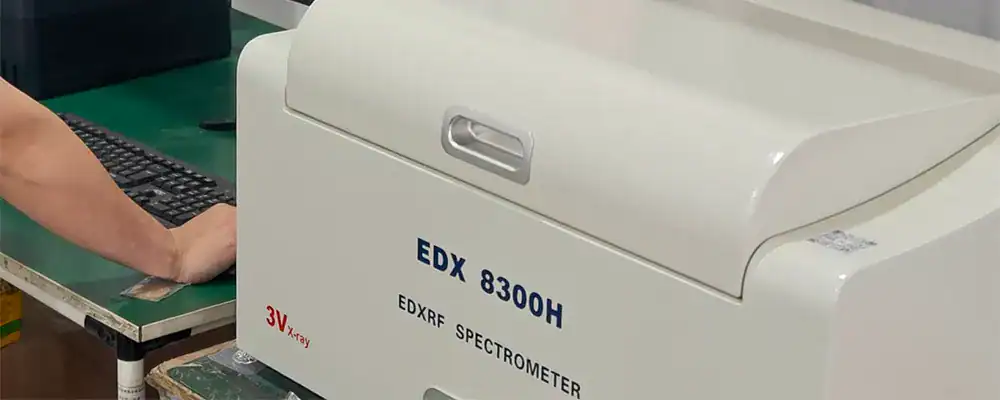
Brands require Tier-1 suppliers capable of providing instant, verifiable audit data. Sourcing directors must evaluate whether a factory has internal laboratory testing capabilities.
If a supplier subcontracts testing or assembly across multiple undocumented facilities, establishing the unbroken chain-of-custody documentation required for UFLPA clearance or CBAM reporting becomes nearly impossible.
The Luxuryhome Benchmark
Luxuryhome operates a wholly-owned, vertically integrated manufacturing base. This consolidated footprint eliminates multi-tiered sourcing ambiguity. Crucially, our internal laboratories generate the empirical testing data required for CPSC eFiling and EU DPPs before the product leaves the loading dock.
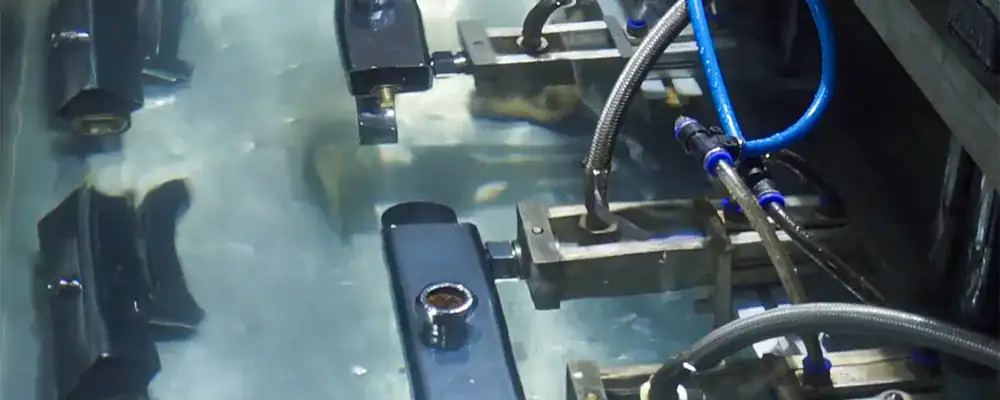
For example, our diverter switches are mechanically validated through 10,000 switching cycles at a 0.3 MPa pressure threshold. Prior to packaging, 100% of our shower systems are subjected to high-pressure air leak detection. This zero-defect manufacturing protocol ensures that your electronic compliance data flawlessly matches the physical cargo at the border.
Strategic Operational Scale: Securing Lead Times in a Volatile Market
Beyond engineering and compliance, the ultimate risk for North American and European importers in 2026 is supply chain volatility. Designing a compliant shower system is meaningless if the manufacturer cannot scale production or meet tight shipping schedules.
When vetting suppliers, evaluate their true operational footprint. At Luxuryhome, we neutralize capacity risks through massive, in-house manufacturing. We operate a 35,000-square-meter production base with automated machining matrices and maintain a monthly output capacity of over 60,000 shower systems.
By keeping CNC machining, laboratory testing, and final packaging entirely in-house, we eliminate the delays and quality fade associated with outsourced subcontracting, stabilizing lead times for global project developers and retail distributors.
Frequently Asked Questions (FAQs): 2026 Sourcing & Compliance Standards
Secure Your 2026 Procurement Strategy with Luxuryhome
As regulatory mandates redefine the global sanitary ware market, sourcing substandard shower systems is a severe financial liability. North American and European brands require a manufacturing partner capable of delivering laboratory-validated durability, automated precision, and comprehensive compliance data.
Stop risking your brand reputation and customs clearance on unverified suppliers. Partner with a Tier-1 OEM that sets the industry standard.

More post you may interested in