Norway’s tapware market works a bit differently. In most of Europe, a CE mark gets you in—but in Norway, you also need strict national approvals for drinking water hygiene and noise performance.
If you’re looking for a manufacturer with the right Norwegian certifications, it helps to know why these rules matter. Norway’s soft water and high acoustic standards mean only truly safe, quiet, and compliant products make the cut.
The Legal Hierarchy: How Certification Becomes Essential
Norway’s certification requirements come from a layered legal system. What looks “voluntary” on paper—like a SINTEF certificate—quickly becomes a practical necessity once you understand how the laws stack together.
Planning and Building Act (pbl)
At the top is the pbl, which ensures all construction is safe, healthy, and sustainable. It gives the Ministry authority to set technical regulations and places legal responsibility on project owners and contractors.
TEK17: Technical Requirements for Buildings
TEK17 defines what performance a building must achieve—clean water quality and acceptable noise levels.
DiBK’s guidelines point to specific standards as “pre-accepted solutions.” Using compliant products (e.g., those meeting NKB rules or NS 8175) automatically satisfies the law. Using non-standard products forces builders to prove equivalency—something most plumbers and contractors avoid due to risk.
DOK: Documentation for Construction Products
DOK regulates the product side. It incorporates EU CPR but also enforces national rules for areas not covered by EU standards, like drinking water hygiene and heavy-metal leaching. This gap is where Norway’s strict hygiene rules originate.
Fitness for Use in Sanitary Tapware
In Norway, a faucet must be fit for use—not just mechanically sound, but safe for Nordic water. If a product leaches heavy metals, it fails this test.
DOK requires documentation before a product is sold or installed. If something goes wrong (like lead findings in a school), the documentation chain is reviewed. Without valid proof—often a SINTEF certificate—the installer and supplier carry the liability.
The SINTEF Certification Scheme
Although technically voluntary, the SINTEF Product Certificate is the practical “license to operate” in Norway’s professional sanitary market. It assures architects, builders, and plumbers that the product meets Norway’s strict TEK17 requirements.

Distinction Between Product Certificate (PS) and Technical Approval (TG)
Manufacturers often confuse these two distinct documentation formats. For sanitary tapware, the SINTEF Product Certificate (PS) is the primary mechanism.
| Feature | SINTEF Product Certificate (PS) | SINTEF Technical Approval (TG) |
|---|---|---|
| Primary Scope | Standardized products with established test methods (e.g., standard mixers, valves). | Complex assemblies, novel systems, or products requiring installation guidelines (e.g., wet room panels, pipe-in-tube systems). |
| Basis of Evaluation | Conformity to specific standards (e.g., EN 817 + NKB 4). | Assessment of “fitness for use” where standards may be partial or missing. |
| Content | Certifies product properties and production control. | Includes detailed installation instructions and system integration data. |
| Typical Products | Kitchen faucets, basin mixers, shower thermostats. | Wall boxes, leakage detection systems, pre-fabricated bathroom pods. |
For a standard faucet, a PS is sufficient. However, if the faucet is part of a specialized system (e.g., a boiling water tap with a dedicated tank and safety valves), a Technical Approval (TG) might be required to cover the safety aspects of the entire assembly.
The Certification Process: A Step-by-Step Analysis
The path to obtaining a SINTEF certificate is rigorous and involves multiple stakeholders. It is not merely a paperwork exercise but a verification of product quality and production consistency.
- Phase 1: Application and Documentation Review
The process begins with the submission of a formal application to SINTEF Certification. The manufacturer must provide:
-
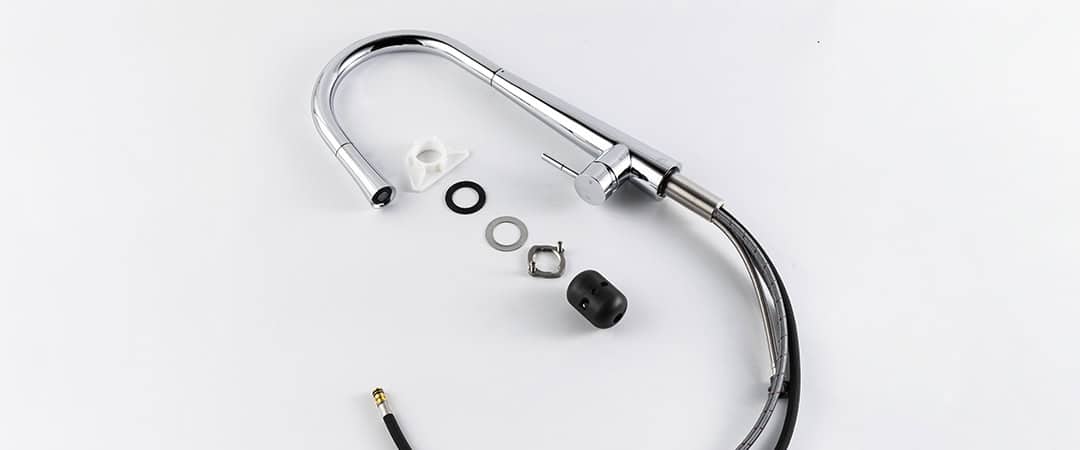
- Detailed Drawings: Cross-sectional drawings of all water-wetted parts.
- Bill of Materials (BOM): A clear list of every material in contact with water, including brass alloys (e.g., CW617N, CW602N) and suppliers of rubber/plastic parts (O-rings, cartridges, hoses).
- Existing Test Reports: SINTEF serves as the certification body and may accept test reports from ISO/IEC 17025 accredited labs, as long as they cover the Norwegian requirements.
- Phase 2: The “Nordic Package” Testing Strategy
Since Norway shares many requirements with its Nordic neighbors (Sweden, Denmark, Finland), the most efficient strategy is to commission a “Nordic Package” test from a major laboratory like Kiwa, RISE, or Eurofins. This single test program covers:
-
- EN 817 / EN 1111: Mechanical performance for Europe.
- NKB Product Rules 4: Leaching testing for Norway/Finland.
- ISO 3822: Acoustic testing for Norway/Sweden.
- Boverket Building Regulations: Specifics for Sweden.
- STF Type Approval: Specifics for Finland.
By submitting one comprehensive “Nordic” test report to SINTEF, manufacturers avoid paying for duplicate testing.
- Phase 3: Factory Production Control (FPC)
A unique aspect of the SINTEF scheme is the mandatory surveillance of the manufacturing site. It is not enough to test a “golden sample.” The manufacturer must demonstrate that every unit produced matches the tested sample.
-
- ISO 9001: The factory usually must hold ISO 9001 certification.
- Inspection Agreement: A contract must be signed between the manufacturer and an inspection body (which can be SINTEF or a partner). This agreement mandates annual audits where inspectors review quality control logs, material certificates for incoming brass, and pressure test records.
- Phase 4: Evaluation and Issuance
SINTEF engineers review the test reports against the limits in TEK17/NKB 4. If compliant, the certificate is issued.
-
- Validity: 5 years.
- Maintenance: Annual fees apply, and the manufacturer must submit the annual inspection report to keep the certificate valid.
Mutual Recognition and International Reports
A critical insight for international manufacturers is that SINTEF is pragmatic regarding test reports. They do not demand that testing be done in Norway. They accept reports from:
- Kiwa (Netherlands/Germany/UK)
- RISE (Sweden)
- DTI (Denmark)
- TÜV/LGA (Germany)
- Applus+ (Spain)
Provided that the report specifically addresses the NKB 4 leaching parameters and the ISO 3822 acoustic classes. A standard German DVGW report is often insufficient because it may not include the specific Nordic heavy metal analysis (specifically the 10-day leaching protocol) or the specific acoustic classification required by NS 8175.
The NKB 4 Barrier and Material Compliance
The toughest technical hurdle for entering the Norwegian market is the strict requirement for low heavy-metal leaching. While most of Europe shifts to material positive lists, Norway continues to rely on a performance-based leaching test: the NKB Product Rules 4.
NKB Product Rules 4: The Nordic Approach
Established in 1986 by the Nordic Committee on Building Regulations, NKB 4 is the reference document for TEK17 §15-5 regarding “health.” Its primary objective is to prevent lead (Pb) and cadmium (Cd) poisoning.
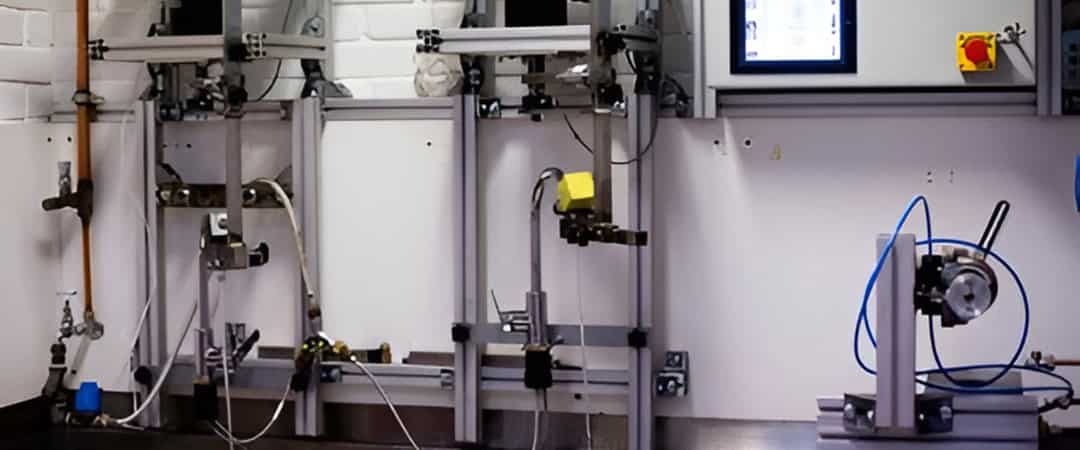
- The Test Protocol
The test is significantly more aggressive than standard European migration tests.
-
- Test Water: A synthesized water designed to mimic the corrosive, soft water found in the Nordic granite bedrock regions. This water has low buffering capacity, making it aggressive toward brass alloys.
- Conditioning: The faucet is flushed and allowed to stagnate.
- Duration: The test typically runs over a period of 10 days.
- Analysis: Water samples are analyzed using Inductively Coupled Plasma Mass Spectrometry (ICP-MS) or Atomic Absorption Spectroscopy (AAS).
- The Limit Values
The acceptance criteria are extremely strict:
-
- Lead (Pb): Maximum 20 µg total amount leached into the test water.
- Cadmium (Cd): Maximum 2 µg.
- Nickel (Ni): Often assessed with a limit of 80 µg (based on NKB) or lower depending on interpretation of Drinking Water Regulations.
Insight: Standard brass (e.g., CW617N) often fails the NKB 4 test unless the internal waterways are treated or coated. This drives the market toward DZR brass or low-lead/lead-free alloys like silicon brass or CW511L. Manufacturers using typical global brass mixes frequently fail the test and must produce a dedicated “Nordic SKU.”
The 4MS Initiative and Harmonization
Norway is aligning with the 4MS Initiative (France, Germany, Netherlands, Denmark). This is a collaboration to harmonize the tests for materials in contact with drinking water.
-
- Transition: While NKB 4 remains the primary test, SINTEF increasingly accepts evidence based on the 4MS Common Approach.
- Positive Lists: The 4MS maintains a “Positive List” of metallic materials. Using an alloy from this list (e.g., specific categories of copper-zinc-lead alloys) is a prerequisite for acceptance, though the leaching test (NKB 4 or the harmonized EN 16516 method) is still required to prove the finished product performance.
Organic Materials: KTW-BWGL and W270
Faucets are not just metal; they contain rubber O-rings, plastic cartridges, and PEX hoses. These “organic” materials are subject to microbial growth and chemical migration.
-
- Norwegian Acceptance of German Standards: Norway does not have its own distinct test for organics. Instead, SINTEF accepts certification against the German KTW-BWGL (Assessment criteria for plastics and other organic materials in contact with drinking water).
- The Standard: This involves testing for the migration of organic carbon (TOC), specific substances, and the enhancement of microbial growth (DVGW W270).
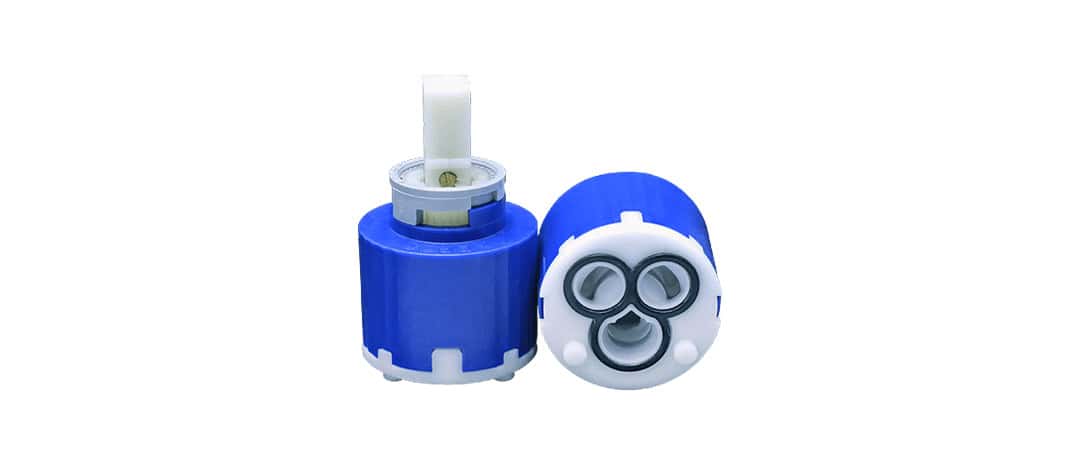
- Implication: A manufacturer must ensure their component suppliers (e.g., the cartridge maker like Kerox or Sedal, the hose maker like Neoperl) provide valid KTW-BWGL certificates. Without these sub-certificates, the SINTEF application will stall.
Flexible Hoses: The Weak Link
A specific focus in Norway is on the flexible connection hoses supplied with the faucet. These are a frequent source of water damage (bursting) and taste/odor complaints.
-
- EN 13618: Hoses must meet this standard.
- Material: Norway strongly favors PEX (cross-linked polyethylene) or specialized PEX-lined hoses over traditional EPDM rubber hoses, due to better hygiene (less taste/smell) and durability.
- Documentation: SINTEF often requires the hose to have its own approval or be explicitly listed in the faucet’s BOM with a valid test report.
Acoustic Performance: Meeting NS 8175
Norway has some of the strictest sound insulation requirements in the world. The long, dark winters mean people spend considerable time indoors, making acoustic comfort a high priority in building regulations.
NS 8175: Acoustic Conditions in Buildings
TEK17 §13-9 references NS 8175 Acoustic conditions in buildings – Sound classification of various types of buildings. This standard defines four classes of acoustic quality:
- Class A & B: High quality (better than regulation).
- Class C: The minimum regulatory requirement for new housing.
- Class D: Lowest class (often for renovations).
To achieve Class C sound insulation between apartments, the noise generated by technical installations (like a faucet running or a toilet flushing) must be kept below strict limits (typically roughly 30-32 dB in the neighboring room, though the faucet source noise is measured differently).
ISO 3822 and Acoustic Groups
Faucets are tested in a laboratory reverberation room according to ISO 3822. The noise they produce is measured at a reference pressure of 3 bar (0.3 MPa). Based on the noise level (Lap), they are assigned a group:
| Acoustic Group | Noise Level (Lap) at 3 bar | Suitability in Norway |
|---|---|---|
| Group I | ≤20 dB(A) | Essential for apartments, hotels, and multi-unit dwellings. Required to meet NS 8175 Class C easily. |
| Group II | 20 < Lap ≤ 30$ dB(A) | Acceptable for detached houses or basements, but risky for multi-unit projects. |
| Unclassified | > 30 dB(A) | Generally unacceptable for the professional market. |
The Strategic Necessity of Group I
While TEK17 doesn’t explicitly require “Group I,” the acoustics effectively do. A Group II faucet in a typical apartment building can exceed noise limits in neighboring rooms, creating a TEK17 violation. Fixing this (opening walls to add insulation) is extremely costly, so major projects almost always specify Acoustic Group I. To meet this, manufacturers must design water pathways, cartridges, and aerators to reduce turbulence and cavitation.
Mechanical and Functional Standards
Beyond the specific Nordic requirements for hygiene and noise, faucets must meet the harmonized European standards for mechanical functionality. These ensure the product won’t break, leak, or scald the user.

EN 817: Single Lever Mixers
The vast majority of modern faucets are single-lever. EN 817 is the bible for these products.
- Endurance: The lever is robotically cycled 70,000 times (simulating >10 years of use) to ensure the cartridge doesn’t wear out or leak.
- Leaktightness: The body is pressurized to 16 bar (static) to check for porosity in the brass casting. The cartridge is tested at operational pressure to ensure it seals completely.
- Torsion: The spout and lever are twisted to ensure they don’t snap off.
EN 1111: Thermostatic Mixers
For shower and bath mixers, EN 1111 applies. This is critical for safety.
- Anti-Scald: The valve is tested to ensure that if the cold water supply fails, the hot water shuts off almost instantly (typically < 2 seconds) to prevent burns.
- Temperature Stability: The mixer must maintain the set temperature (e.g., 38°C) even if the pressure in the supply lines fluctuates (e.g., someone flushes a toilet).
EN 1717: Backflow Prevention
TEK17 dictates that pollution of the drinking water grid must be prevented. Faucets with pull-out sprays (like kitchen mixers) pose a risk: if the spray head falls into a sink full of dirty water and pressure drops, dirty water could be sucked back into the mains.
- Requirement: Kitchen faucets with pull-out sprays must have approved backflow prevention devices (check valves/vacuum breakers) integrated. SINTEF checks strictly for compliance with EN 1717 during the certification process.
Automatic Shut-off (Waterstop)
A specific nuance in TEK17 guidelines involves kitchen installations in rooms without floor drains (which is common in modern open-plan kitchen/living rooms).
- The Rule: If there is no floor drain, there must be an automatic water shut-off device (leak detector) or the installation must be “secured against water damage.”
- Implication: While the faucet itself doesn’t always need to have this built-in, many high-end Norwegian kitchen faucets are now sold compatible with, or integrated with, automatic shut-off valves (water fuse) to meet this requirement seamlessly.
Practical Verification: How to Check and Validate Certifications
For buyers, plumbers, and project managers, “trust but verify” is the operational standard. There are two primary channels to verify if a faucet has the required documentation and certification for the Norwegian market.
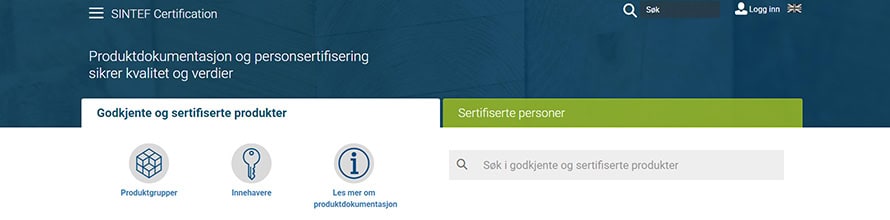
The Official SINTEF Certification Portal
The most definitive method to check if a product holds a valid SINTEF Product Certificate (PS) or Technical Approval (TG) is via the official SINTEF Certification website.
- Website: www.sintefcertification.no»
- How to Search:
- By Certificate Number: If the packaging or datasheet lists a number (e.g., “PS 3022”), enter this directly to see the valid certificate.
- By Manufacturer: You can search by the company name (e.g., “Oras”, “Grohe”, “FM Mattsson”) to see a list of all their valid certificates in Norway.
- By Product Type: Select “Sanitary tapware” or “Sanitary appliances” from the category list to browse all approved products.
- What to Look For:
- Status: Ensure the certificate status is “Valid” (Gyldig). Expired certificates will often be archived or marked clearly.
- Scope: Download the PDF of the certificate. Check the “Product description” section to ensure the specific model number (SKU) you are buying is explicitly listed. A certificate for a “Kitchen Mixer Series X” does not automatically cover “Series Y” unless listed.
The NOBB Database (Norsk Byggevarebase)
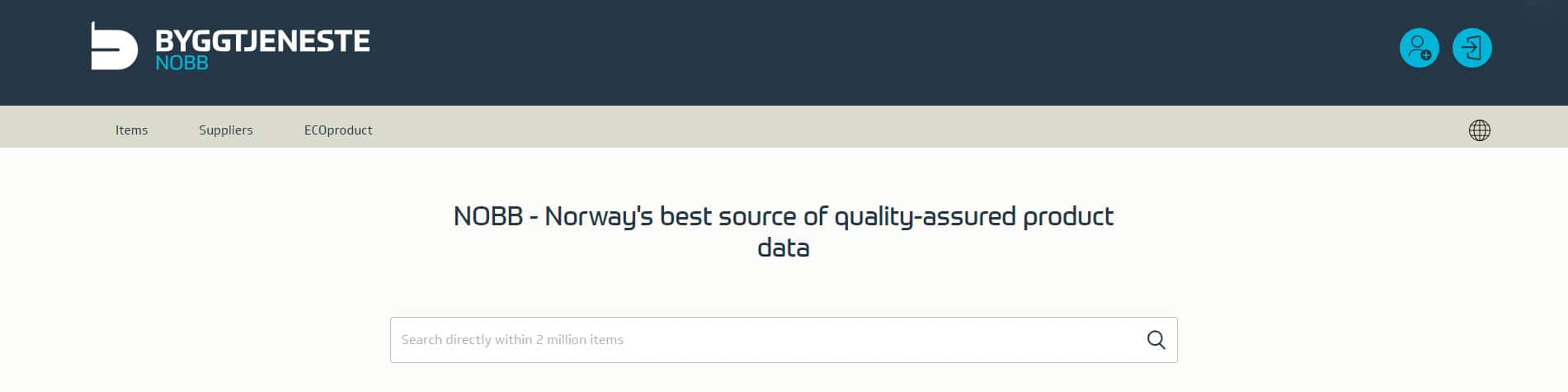
For the professional trade, the NOBB database is the main hub for all product information. It has merged with the NRF database, creating a single source for HVAC and construction products.
- Website: www.nobb.no» or via the NOBB mobile app.
- The NRF Number: In Norway, plumbing products are identified by a 7-digit NRF number (e.g., 420 12 34). This number is more important than the manufacturer’s own article number for logistics.
- Verification Process:
- Enter the NRF number or product name in NOBB.
- Open the “Dokumentasjon” tab.
- A compliant product should provide a SINTEF Certificate and an FDV document.
If these are missing, plumbers may refuse installation because they cannot produce the required handover documents for the building owner.
Secondary Verification: Testing Institutes (Kiwa/RISE)
If a product claims compliance but lacks a SINTEF certificate (relying instead on a “technical file” approach), you may need to verify the underlying test reports.
- Kiwa: Use the Kiwa Certificate Finder to verify claims of “Kiwa Watermark” or specific NKB 4 test reports.
- RISE (Sweden): Use the(https://www.ri.se/en/certification-at-rise/product-certification) to verify Swedish type approvals, which often share the same test basis as Norwegian requirements.
Future Regulatory Outlook: The End of NKB 4?
The regulatory ground is shifting, albeit slowly.
The EU Drinking Water Directive Recast (2020/2184)
This Directive aims to harmonize hygiene requirements across Europe.
- Article 11: Requires the creation of European positive lists for starting substances.
- Timeline: These lists are still being adopted. Once fully implemented—likely in the mid-2020s—national tests like NKB 4 and KTW-BWGL are expected to be replaced by a unified European test (potentially based on EN 16516).
- Impact: Manufacturers should track this closely. Until the new system is fully in place and enforced, Norway will continue using NKB 4. During the transition, SINTEF will likely accept both the existing NKB tests and the new European harmonized tests.
Sustainability and EPDs
The focus is broadening from “safe” to “sustainable.”
- BREEAM-NOR: The leading green building certification in Norway rewards products with Environmental Product Declarations (EPDs).
- SINTEF Environmental Certificate: SINTEF now offers an environmental certification that verifies the EPD and absence of hazardous substances (beyond just lead/cadmium). This is becoming a competitive advantage in public procurement projects.
Conclusion
Getting faucets certified for Norway isn’t just a box-ticking exercise—it’s a deep dive into quality that goes far beyond standard European requirements. Because everything has to meet TEK17, the market expects four things:
- Very low heavy-metal leaching (NKB 4)
- Quiet operation (ISO 3822 Group I)
- Strong mechanical performance (EN 817/1111)
- Reliable, traceable production quality
The SINTEF Certificate is widely recognized, but it’s earned through solid engineering—like DZR brass and low-noise components.
If you need a manufacturer» compliant with Norway’s standards, look for one that treats the Nordics as a single quality block and uses shared testing through Kiwa, RISE, or SINTEF to cover all four markets.